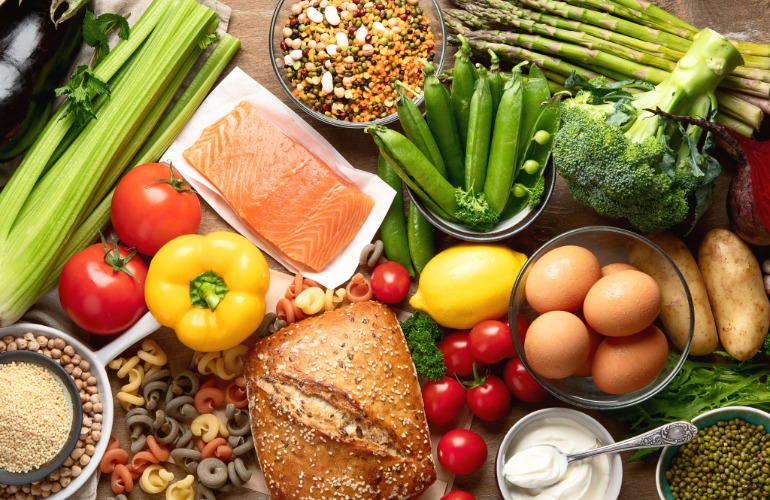
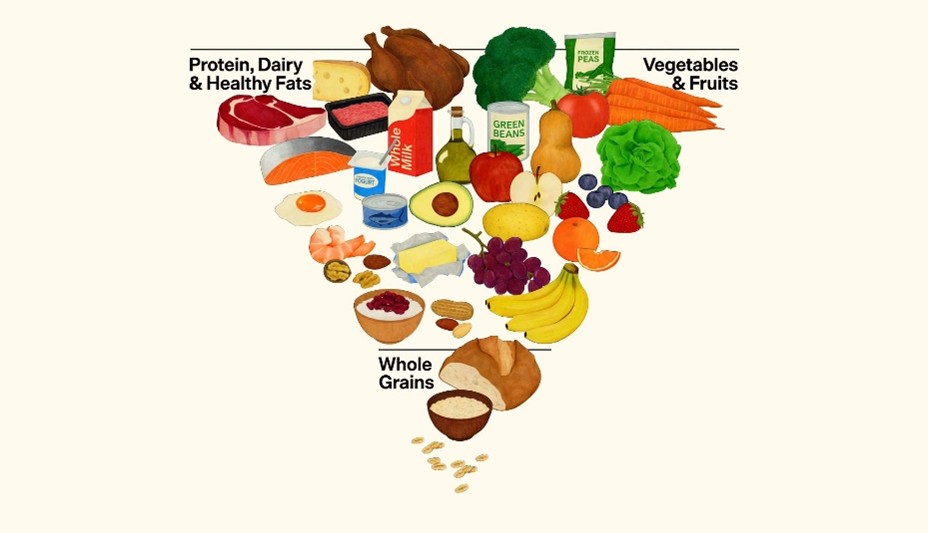
In case you haven’t heard, America’s dietary guidelines have received an overhaul. The Department of Health and Human Services and the Department of Agriculture unveiled the new guidelines on January 7th. The new Dietary Guidelines for Americans, 2025-2030 focus on avoiding highly processed foods and emphasize eating natural, nutrient-dense foods (also known as whole foods). The new guidelines also feature a completely revamped food pyramid to visually highlight the changes.
Published every five years, the dietary guidelines are used by medical professionals and policymakers to help determine what type of foods doctors should recommend to their patients, what students can consume in school lunch programs, and what people can purchase with government food assistance programs. The guidelines also influence what foods our military serves to its members.
New emphasis on eating enough protein
So, what are some of the biggest changes? The new dietary guidelines focus on eating more protein, from both plant and animal sources, than previously suggested. The new recommendation is based on body weight, recommending 1.2 to 1.6 grams of protein per kilogram per day (the equivalent of 81.6 to 109 grams for a 150-pound person). The guidelines also emphasize eating full-fat dairy products with no added sugars, calling for three servings per day for someone on a daily 2,000-calorie diet.
The harmful effects of eating highly processed packaged foods are also highlighted, along with foods that contain added sugar, salt, artificial flavors, petroleum-based dyes, artificial preservatives, and non-nutritive sweeteners in beverages. Another change is recommending the use of healthy fats such as olive oil but also suggesting butter and beef tallow as an option. There is also an emphasis on consuming more fruits and vegetables and fiber-rich whole grains. For more details, you can read the complete guidelines here.
Guidelines endorsed by major medical organizations
The new, simplified dietary guidelines have been endorsed by the American Medical Association and the American Academy of Pediatrics. Both organizations have praised the guidelines for warning against highly processed foods as well as avoiding added sugar and too much sodium.
“We have a serious epidemic of chronic disease in this country, including heart disease, high blood pressure and type 2 diabetes, remarked Dr. Khwaja Ahmed Hussain, a primary care physician in Shrewsbury. “These conditions affect far too many Americans. Eating a healthier diet is critical to help avoid these problems.”
Stay in touch with the conversation, subscribe to the RSS feed for comments on this post.