By John Lewczyk, PT
Department of Rehabilitation
As the days get shorter and the nights colder, many of us will soon be raking leaves and even shoveling snow. But chores that require repeated bending and lifting can often strain our muscles and cause pain. Here are some tips to help you avoid problems while still getting your work done:
Preparation Before You Start
Yard work is exercise, and it can be tough on your body. Warm up by doing some marching in place or walking before you begin. Dress appropriately for the conditions. Remember to stay hydrated. Stretching your neck, back, and legs before you begin may help you avoid getting hurt. Don’t do any stretches that cause pain and always stretch gently. Here are some simple stretches:
- Neck Stretch (Standing): Tilt your head sideways. You can gently pull on your head with your hand for a gentle stretch. Hold for 20 seconds and repeat 3 times on each side.
- Low Back Stretch (Seated): Sit in a chair with your feet flat. Slowly bend forward until you feel a stretch in your lower back. Hold for 20 seconds and repeat 3 times.
- Low Back Stretch (Standing): Place your hands on your lower back and gently bend backwards until you feel a mild stretch in your lower back. Hold for 1-2 seconds and repeat 5-10 times.
- Hip and Buttock Stretch (Seated): Sit in a chair and place your right ankle on your left thigh. Gently pull your right knee toward your left shoulder until you feel a stretch. Hold for 20 seconds and repeat 3 times on each leg.
- Hamstring Stretch (Seated): Sit in a chair and stretch one leg forward with your heel on the ground. Keep your back straight and bend forward until you feel a stretch in the back of your leg. Hold for 20 seconds and repeat 3 times on each leg.
Use Good Form
When lifting or shoveling heavy things, especially snow, use your legs—not your back. Keep your head straight, shoulders back, and maintain a slight inward curve in your lower back. This may help protect your back from injury,
Also, never twist your body when throwing snow. Instead, turn your whole body by stepping and pivoting. It’s safer to walk a few steps and gently drop the snow instead of tossing it far. Taking those few extra steps can help prevent back pain.
Take Your Time
When raking or shoveling a large area be sure not to rush. It’s important to go slow and listen to your body—especially if you’ve had back pain before. Working too fast can lead to bad posture and injury. Take breaks or spread the work out into shorter sessions. Be honest with yourself about how much you can do in one hour or one day.
Pick the Right Tools
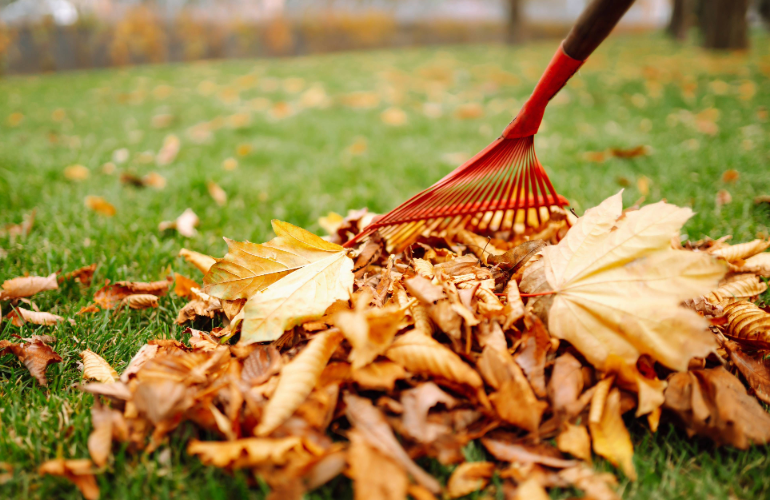
Using the right rake or shovel can make a big difference. For raking, make sure the handle fits your height so you don’t strain your back. You should be able to hold it comfortably while raking leaves toward you.
Some shovels are made to reduce back strain when pushing snow. These are called ergonomic shovels. If you’re lifting snow instead of pushing it, a straight-handled shovel usually works better. You can also use a smaller shovel size so that you are not moving as much snow with each shovelful. You can use both types of shovels depending on the job. You can learn more about safe ways to shovel snow in this video.
No matter what your age or physical condition, it’s easy to strain a muscle if you’re not careful. Staying fit throughout the whole year may help you be better prepared for raking and shoveling when the time comes. So be sure to play it safe this fall and winter. If you’re not sure what your body can handle or whether you should be doing this type of activity, or simply want help avoiding injury, talk to your primary care provider. They can help determine how much yardwork and exercise your body can handle.

About John Lewczyk, PT
A graduate of the State University of New York at Buffalo in 1988, John is a physical therapist with a special interest in spinal pain, tendinopathy and sports medicine injuries. John enjoys helping patients manage their physical therapy conditions by providing the education and instruction that they need to make a full recovery. “I strive to be a facilitator who gives his patients the tools they need to take care of themselves.” John...
View profile View posts by this doctorStay in touch with the conversation, subscribe to the RSS feed for comments on this post.