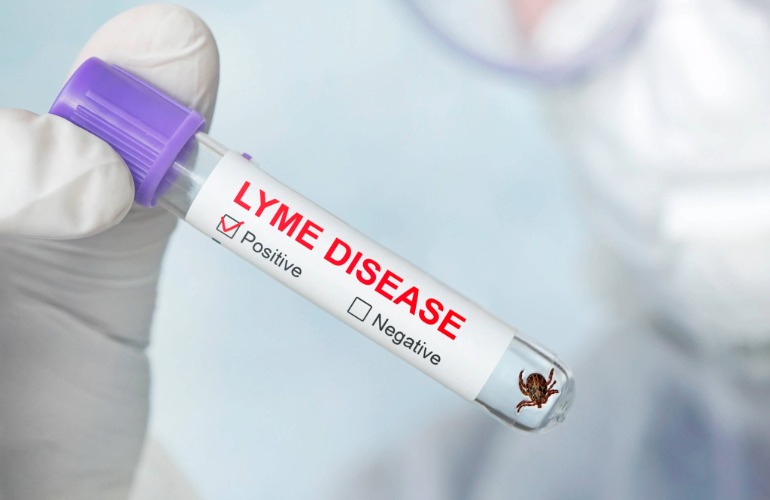
Lyme disease is a common tick-borne illness that can cause serious health problems if it is not treated. It is caused by the bacteria Borrelia burgdorferi. People get Lyme disease from the bite of infected blacklegged ticks, also known as deer ticks. These ticks often live on white‑tailed deer as well as other animals.
Lyme disease is very common in New England where it was first discovered. Blacklegged ticks are often found in grassy, bushy and wooded areas. They usually wait on low branches or tall grass, about knee-high, where they can easily latch onto an animal or person walking by.
Early Lyme Disease Symptoms to Watch For
Signs of Lyme disease usually begin three to 30 days after a tick bite. The most well-known symptom is an expanding red rash that looks like a bull’s-eye. This rash starts where the tick bites you and slowly spreads outward. It may be up to 12 inches wide and often has a clear center. However, not everyone gets a bull’s-eye rash. Some people only notice a red patch, and others may not have a rash at all.
Other early symptoms often feel like the flu and may include:
- Fever and chills
- Headache
- Extreme tiredness
- Muscle and joint pain
- Stiff neck
- Swollen lymph nodes
If you notice these symptoms, especially after spending time outdoors, contact your healthcare provider right away.
Long-Term Effects of Untreated Lyme Disease
If Lyme disease is not treated early, the infection can spread to other parts of the body weeks or even months later. This can lead to more serious health problems.
Later symptoms may include:
- Joint pain and swelling, often in the knees.
- Nervous system problems, such as numbness, weakness, facial drooping, or trouble thinking clearly.
- Heart problems, such as an irregular heartbeat (this is rare but serious).
Early treatment helps lower the risk of these long-term effects.
Lyme Disease Treatment Options
Lyme disease is usually easy to treat when caught early. Doctors often prescribe antibiotics such as doxycycline, amoxicillin, or cefuroxime. Treatment usually lasts two to four weeks.
It is important to take all your prescribed medicine exactly as directed, even if you start to feel better. This helps make sure the infection is fully treated. In some cases, a doctor may give one dose of doxycycline within 72 hours of a tick bite to help prevent Lyme disease. This depends on factors such as the type of tick and how long it was attached.
Some people may still feel tired or sore after treatment. This is called Post-Treatment Lyme Disease Syndrome (PTLDS). It does not mean the infection is still active. Treatment focuses on managing symptoms, not more medication.
How to Prevent Lyme Disease and Tick Bites
The best way to avoid Lyme disease is to prevent tick bites. Taking simple steps can help keep you safe:
- Know where ticks live. Be extra careful outdoors in woods, brush, and tall grass.
- Stay on clear paths when hiking or walking.
- Wear protective clothing, including long sleeves, long pants, and pants tucked into your socks.
- Choose light-colored clothes so ticks are easier to spot.
- Use insect repellent: Choose EPA-approved repellents with DEET or picaridin.
- Treat your clothes and gear with permethrin products.
- Check daily for ticks on your skin, hair, and clothes, as well as on kids and pets.
- Shower after being outdoors: Showering within two hours can help wash off ticks.
- Dry clothes after washing on high heat to kill any ticks.
- Keep your yard tidy: Mow the lawn, remove leaf piles, and trim bushes.
What to Do If You Find a Tick
If you see a tick attached to your body, remove it as soon as possible. Use fine‑tipped tweezers to grab the tick close to your skin. Pull straight up with steady pressure. Do not twist or squeeze the tick. After removal, clean the bite area with soap and water or rubbing alcohol.
Removing a tick within 24 to 36 hours greatly lowers your chance of getting Lyme disease. If you want your healthcare provider to identify the tick, place it in a sealed container with rubbing alcohol.
Stay Safe and Enjoy the Outdoors
Learning about Lyme disease and taking simple safety steps can greatly reduce your risk. Stay alert, protect yourself from ticks, and reach out to your healthcare provider if you have symptoms or concerns. With the right care and prevention, you can enjoy the outdoors safely.
Stay in touch with the conversation, subscribe to the RSS feed for comments on this post.