What Is Osteoporosis?
May is Osteoporosis Awareness and Prevention Month, the perfect time to learn more about this all-too-common problem. Osteoporosis is a bone disease that makes bones weak and brittle. When bones become brittle, even small actions—like coughing, standing up, or a simple fall—can cause a broken bone (fracture).
Osteoporosis can affect both men and women at any age. However, it is more common in older adults, especially women. More than 200 million people worldwide have osteoporosis. In the United States alone, over two million osteoporosis-related fractures happen each year.
Most people do not have symptoms until a fracture occurs. These fractures can lead to pain, trouble moving, and other health issues. Once someone has an osteoporosis-related fracture, they are more likely to have another one in the future. Fractures also raise the risk of serious health complications. The good news is that screening tests can find osteoporosis early, and treatments are available to help lower the risk of fractures in the future.
What is a Bone Density Test?
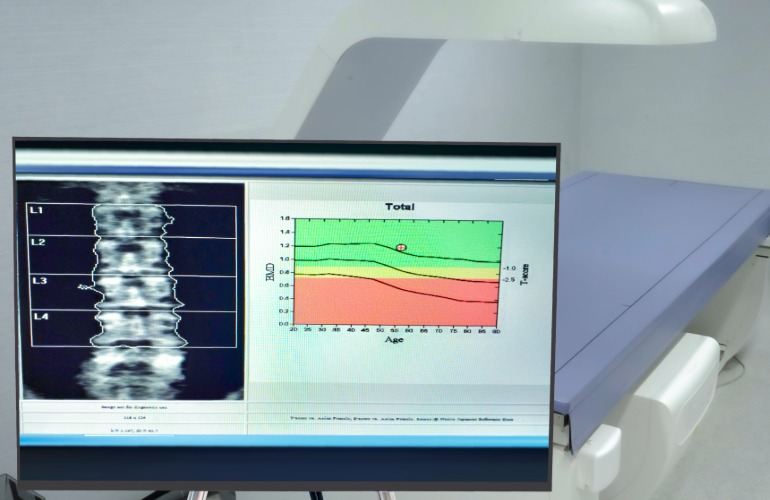
A bone density test, also known as bone densitometry, is used to help diagnose osteoporosis and check how well treatment is working. This test measures bone density, which helps show how strong your bones are and how likely they are to break. It is painless, non-invasive, and uses a very low dose of X‑ray. No injections, dyes, or medications are needed in this test.
Who Should Have Bone Densitometry Testing?
Talk with your healthcare provider to see if a bone density screening is right for you. The National Osteoporosis Foundation recommends bone density testing for:
- Women age 65 and older.
- Men age 70 and older.
- Anyone who has had a low‑trauma fracture.
- Those with a medical condition linked to osteoporosis.
- Anyone taking medications that can weaken bones.
- Those planning osteoporosis treatment, if testing would help with that decision.
- Anyone already being treated for osteoporosis to monitor bone health.
What Happens During a Bone Density Test?
During the exam, you will lie on your back on a padded table for a few minutes while images are taken of your lower back and hip. Sometimes, the arm is also checked. The entire test is quick, easy, and painless.
What Is Vertebral Fracture Assessment (VFA)?
Vertebral Fracture Assessment (VFA) is a test that checks for fractures in the middle and lower spine. It is done at the same time as a bone density test using the same equipment.
Many spinal fractures cause no pain, so people may not know they have one. Finding a vertebral fracture means there is a higher risk of future fractures elsewhere in the body. If a fracture is found, it is important to see your doctor right away for further care.
Who Should Have a VFA Test?
The National Osteoporosis Foundation recommends VFA screening for:
- Women age 70 and older.
- Men age 80 and older.
- Anyone with significant height loss.
- Postmenopausal women under 70 or men ages 50–79 who have had a low‑trauma fracture.
- Anyone taking long‑term steroid medications, such as prednisone.
Since osteoporosis is a disease that has no obvious symptoms, it can be difficult to know if you are suffering from it. That’s why proper testing is so important for your health. One simple misstep with osteoporosis can lead to a life-altering fracture—causing pain, disability and loss of independence. That’s why it’s so important to take all the steps necessary to detect and prevent osteoporosis.
Stay in touch with the conversation, subscribe to the RSS feed for comments on this post.