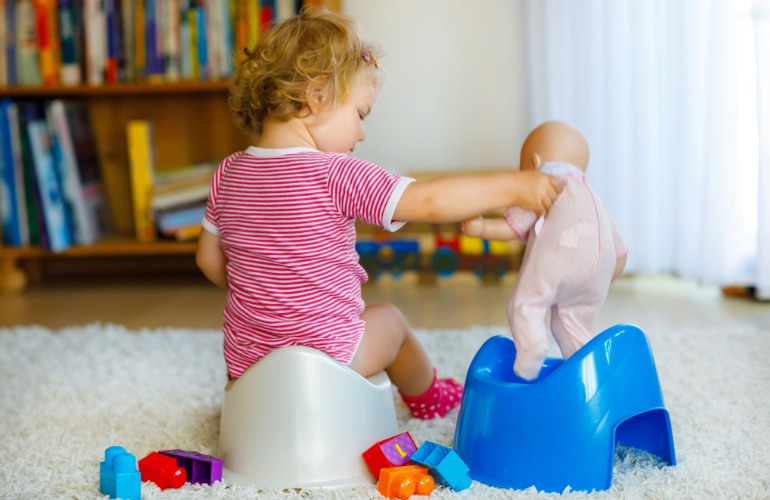
Potty training is an important step in your child’s growth. Most children are potty trained by age three, but every child develops at their own pace. Knowing when to start can be hard, but looking for signs of readiness can help.
Is Your Child Ready?
Your child may be ready for potty training if they can:
- Walk to and sit on the toilet.
- Pull their pants up and down.
- Stay dry for about two hours.
- Follow simple directions.
- Tell you when they need to use the bathroom.
- Show interest in the toilet or “big kid” underwear.
- Go to another room when they need to poop or pee in their diaper.
Many children show these signs between 18 and 24 months, but some need more time. There is no need to rush. Starting too early can make potty training harder.
Talk About it First
Start by talking with your child about using the toilet. Reading potty-training books together can help them learn what to expect. Encourage questions and answer them in simple, clear ways. Use the same words each time when talking about body parts and going to the bathroom. This helps your child understand more easily.
Get the Right Tools
Potty-training tools can make learning easier. A small potty chair is often a good choice because it is made for children and is easy for them to reach. You can also use a step stool with a regular toilet. This helps your child climb up safely and keeps their feet supported.
Create a Routine
A regular schedule helps children learn. Have your child sit on the toilet at certain times during the day, such as:
- After waking up
- Before leaving the house
- Before naps
- Before bedtime
Even if they do not need to go, sitting on the toilet for a few minutes helps them get used to the routine.
Celebrate Progress
Potty training takes time. That’s why patience is so important. Accidents are normal, so do not punish your child for wetting or soiling their clothes. Instead, praise them for trying and for using the toilet. Positive encouragement helps build confidence and motivation.
Switch to Underwear
As your child becomes more successful, introduce training pants or underwear. After a few weeks of daytime success, they may be ready for “big kid” underwear.
Keep in mind that many children still need diapers or pull-ups at night. Bedwetting is common and usually improves with time. Feel free to contact your child’s primary care provider if you have any questions on potty training.
Remember, every child learns at their own pace. Be patient, stay positive, and celebrate each step toward success in this important part of growing up.
Stay in touch with the conversation, subscribe to the RSS feed for comments on this post.