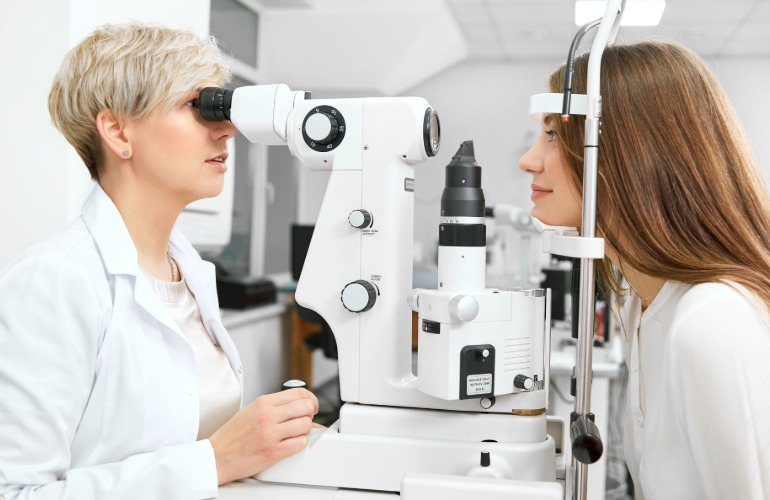
Having a yearly eye exam is an important part of your overall health. Even if you think your vision is fine, you could need an adjustment to your prescription to see more clearly. Vision changes can occur so gradually that it’s difficult to notice them.
Regular eye exams are also an important part of catching eye problems early. Many eye diseases, such as glaucoma, can go completely unnoticed until they are detected during an exam. Finding an eye disease in its early stages is the best way to protect your vision. Below are some of the most common eye diseases that can affect your sight:
Diabetic retinopathy: This disease causes damage to blood vessels in the back of the eye. It is the leading cause of blindness in American adults. However, early treatment can often prevent loss of vision and blindness.
Cataracts: A cataract is a clouding of the lens inside the eye, which makes vision blurry or dim. It is the leading cause of vision loss in the United States. Fortunately, treatment can restore vision.
Glaucoma: This is a group of diseases that damage the optic nerve, leading to loss of sight. It usually happens when fluid builds up in the front part of the eye. Vision damage from glaucoma can be prevented with early treatment.
Age-related macular degeneration (AMD): This causes gradual breakdown of light-sensitive tissue in the eye, leading to a loss of central vision. Macular degeneration is the leading cause of vision loss in older adults.
Amblyopia: Also known as lazy eye, this disease causes reduced vision because the eye and brain aren’t working together properly. It’s the most common cause of vision loss in children.
Don’t neglect eye problems
Unfortunately, many eye diseases can go unnoticed for a long time without an exam. This is because they often don’t have symptoms in their early stages. It’s important to be aware of any problems or changes in your vision. If you notice any of the following eye problems, don’t wait for your next appointment. Visit your eye doctor as soon as possible.
- Eye pain.
- Draining or redness in the eye.
- Decreased vision.
- Double vision.
- Floaters (tiny specks that appear to float before your eyes).
- Circles (halos) around lights.
- Flashes of light.
It is believed that only half of people at high risk for vision loss visit an eye doctor every year. By taking advantage of a comprehensive eye exam with dilation, many of these people could have detected their eye problems early—preventing a life-changing loss of vision.
How often do we need to get eye exams?
Children’s eyes should be checked regularly by an eye doctor or pediatrician. The US Preventive Services Task Force recommends that children have at least one eye exam between age three and five years.
According to the Centers for Disease Control and Prevention (CDC), people with diabetes should have a dilated eye exam every year. Those at a higher risk for glaucoma should have a dilated eye exam every two years. These include:
- Black Americans 40 years and older.
- All adults older than 60, especially Mexican American adults.
- People with a family history of glaucoma.
Don’t neglect your eye health!
Few things are more precious than your eyesight. So please make your vision health a priority by getting regular eye exams and not neglecting any vision problems. To schedule a comprehensive eye exam, just call the Reliant Optometry department at (508) 856-9599 or use MyChart.
One Response
Stay in touch with the conversation, subscribe to the RSS feed for comments on this post.
-
Dr Silva, who is with Reliant and has an office in Holden, is an outstanding eye doctor. I very highly recommend him.